

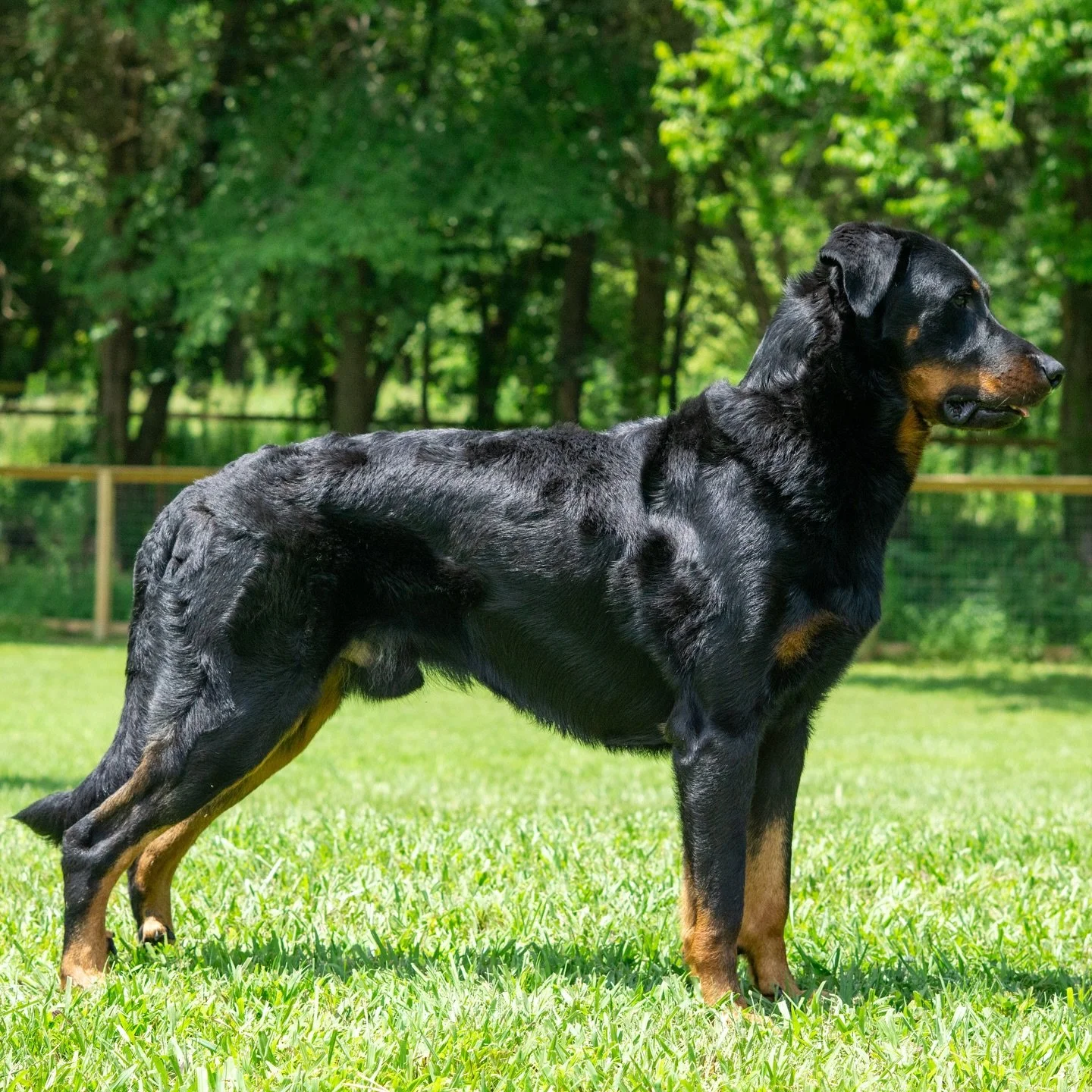
Living with a Beauceron
I love the Beauceron’s intelligence, loyalty, athleticism, and presence. I also know that the most useful conversation is about daily life: what your dog will need, what you enjoy doing, and how those things fit together. Here are some of the questions I encourage you to think through.
Start here: owner fit and temperament; family and other animals; daily activity and independence; coat and care; size, color, and breed comparisons. For puppy price, preservation responsibilities, matching, and refunds, visit the Partnership FAQ.
Related guides: Puppy raising, potty training, crate comfort, and mouthing · Health testing, OFA results, and preservation decisions · JDV puppy investment and ownership commitments
Temperament and owner fit
What is a Beauceron’s temperament like?
The desired adult character is confident, discerning, loyal, and composed, with reserve toward strangers and a strong connection to familiar people. Individuals differ. Genetics, development, health, learning, and environment all influence the dog you live with. A young Beauceron can be exuberant, mouthy, persistent, and easily excited while learning self-control.
Are Beaucerons protective or aggressive?
Guarding instincts and awareness of the environment are part of the breed’s heritage. Responsible ownership develops neutrality, reliable handling, and good judgment. Reserve does not justify uncontrolled aggression or fear. A Beauceron should be managed according to its actual behavior, with thoughtful introductions and support for concerns.
Can a first-time owner succeed?
Yes, a committed beginner can be a good fit. I look for the time, resources, consistency, and willingness to learn that a young Beauceron needs. Meet adults and adolescents, think through your workday and care arrangements, and come prepared to keep learning. I will help you develop your skills as you do the daily work together.
Should I choose a male or female Beauceron?
Start with the individual dog and your household. Adult size, social compatibility, energy, handling needs, and your goals deserve more weight than stereotypes about sex. Discuss resident dogs and your experience honestly. At JDV, your recorded gender selection is guaranteed; a particular temperament, color, litter, or placement date is not. Review matching, voluntary deferral, and the one-year gender-availability refund option.
What should I expect during adolescence?
Size and strength can develop before judgment and dependable habits. Expect continued teaching around excitement, mouthing, distractions, boundaries, and settling. Revisit foundations, use sensible management, and progress in manageable steps. An attractive puppy or impressive pedigree does not replace sustained development.
When might another breed be a better fit?
Reconsider if your plan depends on little daily involvement, guaranteed friendliness with every dog, effortless off-leash reliability, no shedding, or a puppy being left without suitable care through a long workday. Choose a dog whose needs you can enjoy meeting, including on an ordinary busy day.
Family life, other animals, and housing
Are Beaucerons good with children?
Well-matched individuals can be devoted family companions. Their size, exuberance, and herding or mouthing tendencies require adult supervision and management. Teach children respectful interaction, protect the dog’s rest, and separate when direct supervision is unavailable. Discuss children’s ages, behavior, and household activity during matching.
Can they live with cats, small pets, or other dogs?
Some do very well; compatibility is individual. Chasing interests, play style, social history, and the resident animals matter. Use controlled introductions, protected spaces, and secure separation as needed. Cats need escape options and small animals need protection. Growing up together is not a compatibility guarantee.
Can a Beauceron live in an apartment? Is a yard enough?
A housing label alone does not determine suitability. Evaluate bathroom access, daily activity, noise, shared spaces, management, and permission to keep the dog. A yard is useful but does not replace training or engagement. Discuss fencing and safe containment with me for your actual home and proposed placement.
Can I work full-time or leave my dog alone?
Plan dependable care, toilet breaks, appropriate activity, and opportunities for rest. A young puppy needs frequent attention and a realistic daytime-care arrangement. Build independence gradually and watch how the individual copes. Your puppy will need dependable care and suitable breaks during the workday.
Do Beaucerons bark a lot?
Alert barking can occur. Boredom, excitement, frustration, and repeated rehearsal can increase vocal behavior. Build calm household routines, reward settling, manage views and triggers, and provide appropriate activity. Discuss noise sensitivity and close neighbors before choosing a placement.
Exercise, learning, and recovery
How much exercise and mental work do they need?
Plan purposeful physical activity and mental engagement every day, with more than a weekend outlet. For a healthy adult, an illustrative day might include a 30–45-minute morning walk with sniffing, brief training, a midday break, and a 30–60-minute evening walk, controlled play, or suitable activity. Adjust with age, condition, health, weather, and the dog’s response; include substantial quiet rest.
How is puppy exercise different?
Use short, varied learning and exploration opportunities with frequent rest. Growing puppies need age-appropriate movement rather than sustained forced running or repeated high-impact work. Progress gradually with attention to comfort, coordination, and recovery. See JDV’s puppy-development foundations.
Do they have an off switch?
Settling is developed through suitable activity, independent rest, predictable boundaries, and calm practice. Constantly adding stimulation can leave a dog highly aroused. Teach both engagement and recovery; do not assume an athletic breed will automatically know how to relax in your home.
What training or sports suit them?
Choose activities for the individual dog’s age, soundness, interests, and handler goals. Obedience, Rally, scent work, tracking, herding, and other sports can provide meaningful partnership. Foundations and responsible instruction come first. Explore activities or additional puppy development.
What changes in Las Vegas heat?
Plan outdoor activity for cooler conditions, account for pavement temperature, provide water and cool rest, and use indoor learning when needed. Heat, health, and conditioning change the plan. Athletic ability is not protection from heat-related illness.
Coat, grooming, health, and growth
Do Beaucerons shed? Are they hypoallergenic?
Yes, they shed. The short double coat can release substantial hair, especially during seasonal changes. Beaucerons are not a low-shedding choice for allergy-sensitive households. No dog is completely hypoallergenic; discuss actual exposure and household needs before committing.
What grooming do they need?
Brush regularly—often weekly and more frequently during heavier shedding. Bathe as needed, maintain all nails including the double rear dewclaws, check ears and skin, and establish dental care. Teach comfortable handling and cooperative grooming early. Ask me for help with nail care and handling.
How big are they, and how long do they live?
The AKC standard gives male height as 25½–27½ inches and female height as 24–26½ inches at the withers. Adult weight varies; approximately 70–110 pounds is a broad planning range. Healthy condition and balanced structure matter more than maximum weight. A commonly cited lifespan is 10–12 years, with individual variation.
What health issues and feeding considerations matter?
Review parent-specific records and examination dates. Excellent, Good, and Fair OFA hips are normal classifications; Grade I elbow dysplasia is an abnormal finding. A CHIC number records completed, disclosed screening, not universally normal results. JDV considers each finding in the context of the whole dog and proposed pairing. Use a growth-appropriate, complete and balanced nutritional foundation and assess the whole diet before adding supplements. Understand OFA hip grades, Grade I elbows, CHIC, and JDV’s preservation decisions.
Why do Beaucerons have double dewclaws?
Double rear dewclaws are a defining breed-standard feature. They have nails that need routine inspection and maintenance along with the other nails. Explore the structure and breed standard.
Colors, ears, origins, and comparisons
What is a harlequin Beauceron?
The recognized colors are black and tan, and gray, black, and tan known as harlequin. Harlequin adds a blue-gray patch pattern to the black-and-tan base. Color describes appearance; your individual dog’s temperament, structure, and compatibility guide matching. JDV guarantees recorded gender selection, not color.
Harlequin or black and tan: which Beauceron should I choose?
Both are recognized Beauceron colors. Coat pattern does not establish a dog’s ability to become your companion, sport partner, or service prospect. At JDV, most applicants request harlequin males, while only a handful may be produced in a year. A harlequin preference can therefore mean a much longer wait, with no color guarantee. Ask to learn about suitable black-and-tan puppies with an open mind: their connection, character, and potential are the qualities you will live with every day. You may voluntarily defer before accepting an individual puppy for as long as you wish. Read the precise deposit and matching provisions.
Can I choose natural ears?
Natural and cropped ears are both described in the AKC Beauceron standard. Discuss your preference before arrangements. Optional cropping involves an additional financial commitment and substantial aftercare; review JDV’s current service and commitment summary. Ear appearance and training progress vary by individual.
Is a Beauceron a Doberman mix?
No. It is a distinct French herding breed, also called Berger de Beauce or Bas Rouge. A similar black-and-tan appearance does not make it a crossbreed.
How does it compare with a Doberman, Rottweiler, or German Shepherd?
The Beauceron’s French herding heritage differs from the Doberman’s German personal-protection origins. Beaucerons have a short double coat; Dobermans have a smoother close coat. Rottweilers are substantial working dogs, while German Shepherd Dogs are active herding/working dogs with a double coat. All demand thoughtful selection, training, and responsible management.
A breed name does not establish which individual will be calmer, easier, safer, or more compatible. Meet suitable representatives and compare the life each dog requires. AKC’s Beauceron–Doberman comparison and breed comparison tool offer further context.
How do you pronounce Beauceron?
A common English pronunciation is BOH-ser-ahn (US /ˈboʊ.sɚ.ɑːn/). Hear the Cambridge Dictionary pronunciation.
Can a Beauceron be a service dog?
Some individuals may be suitable prospects for a specific handler’s needs. Breed, parentage, and puppy potential do not guarantee completion of service training. Read about evaluated service prospects and training expectations.
Should I consider an adult Beauceron or rescue?
An adult can offer more information about established size, habits, and behavior, but still needs careful matching and time to adjust. Ask about health records, experience with children and animals, handling, time alone, and the support available after placement. Ask about JDV adult availability or learn about American Beauceron Club rescue. Choose the actual dog and the responsibilities you can sustain.
Getting to know your breeder
A thoughtful search includes the adult dogs, the individual health evidence, the reasons for a pairing, the way puppies are raised, and the relationship offered after homecoming. Ask how a breeder responds when development is difficult, circumstances change, or a proposed match is not right. Look for explanations you understand and commitments you can examine.
At JDV, that connection is with me. I plan the pairing, evaluate the puppies, and stay in touch as your dog grows. Current owners have unlimited access to me by text and phone, with video calls when a demonstration would help. You can explore our owners’ experiences, how I raise puppies, and the practical details of our partnership.
Take your time getting to know us
Read about the JDV partnership and our investment and responsibilities before you decide. When you are ready to apply, your application helps me understand your household. I contact enrolled applicants as suitable matches develop. Here is how we stay in touch.
Further reading: American Beauceron Club owner suitability, care and training, and AKC puppy exercise guidance.
Where to read more
JDV educational guide · Updated October 16, 2026. I have written this guide from my experience breeding, evaluating, raising, and living with Beaucerons. Read more about my background.
Use the AKC Beauceron breed overview and official AKC breed standard alongside the American Beauceron Club resources linked above. Breed descriptions explain general tendencies and ideals; they cannot establish an individual dog’s temperament, health, suitability, or future accomplishments.
For a proposed pairing, review parent-specific health evidence and what the records mean. For JDV’s matching, investment, and preservation terms, use the current partnership FAQ and applicable signed documents.
Ready to explore a JDV placement? Review Beauceron puppy availability and the waitlist process. Start with the life you can offer and the qualities that matter to your household.